DIY Furoshiki Bag w/zipper

Updated: Jul 31, 2020
Hello Gems! Lately I have been obsessed with this beautiful satin Furoshiki style bag with wooden handles from & Other Stories boutique! Unfortunately, its been out of stock online for quite a while and I haven't found any dups of this bag anywhere. So, in true Keechii B fashion I resulted to creating it myself!


( & Other Stories Satin O- ring Bag)
I thought I would share this DIY with you guys in case you want to make this one for yourself. Its such a simple make and its so gorgeous to carry for just about any season depending on the fabric you use. It takes 30 minutes or less to make.
This project has minimal sewing so it is even great for those who don't really have much experience sewing. However, I do suggest at least having access to a sewing machine for this particular bag. Of coarse, unless you plan on handstitching it. So here goes!

Materials you Need:
1 1/4 yard fabric 56"-60" wide
16" -18" zipper
4" or 5" Circular Wooden Handles
Sissors
Matching thread
Zipper foot (for sewing machine)
Or stitching needle (for hand sewers)
Sewing Instructions:

Fabric should be folded in half with front sides facing and raw salvages matching.

Pin open edges together and straight stitch edges leaving a small 4 inch opening on one of the shorter sides for turning fabric inside out.

Turn fabric inside out. Press flat. Now you should have one 2 layered fabric piece (no need for extra lining). You can close the 4" opening either by slipstitch by hand or top stitching it close to the edge. This opening will not be visible!


On the longer side of fabric mark your zipper placement with pins, leaving about 13" of fabric free from edge to pin on each side (if your zipper is 18"). Just make sure your zipper placement is centered. You can fold edges in to center with corners matching to mark placement more accurately.

Between the markings, pin your fabric to one side of zipper tape, with zipper face up. Fabric edge close to zipper teeth.
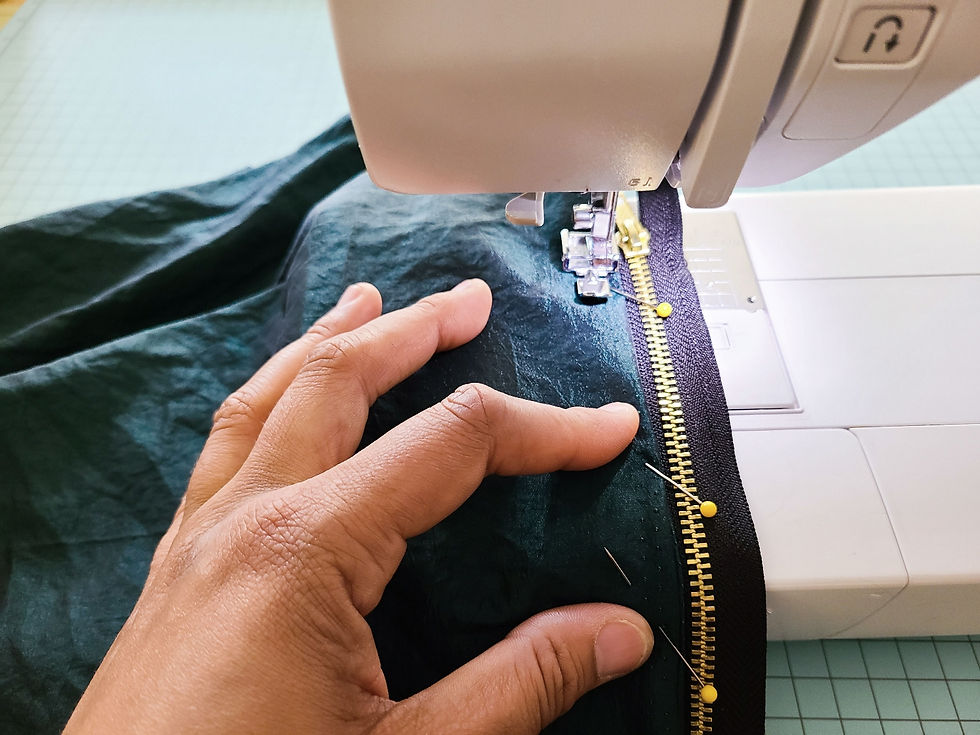
Use your zipper foot on machine to stitch zipper to fabric. Open up zipper to repeat this step for other side of zipper.
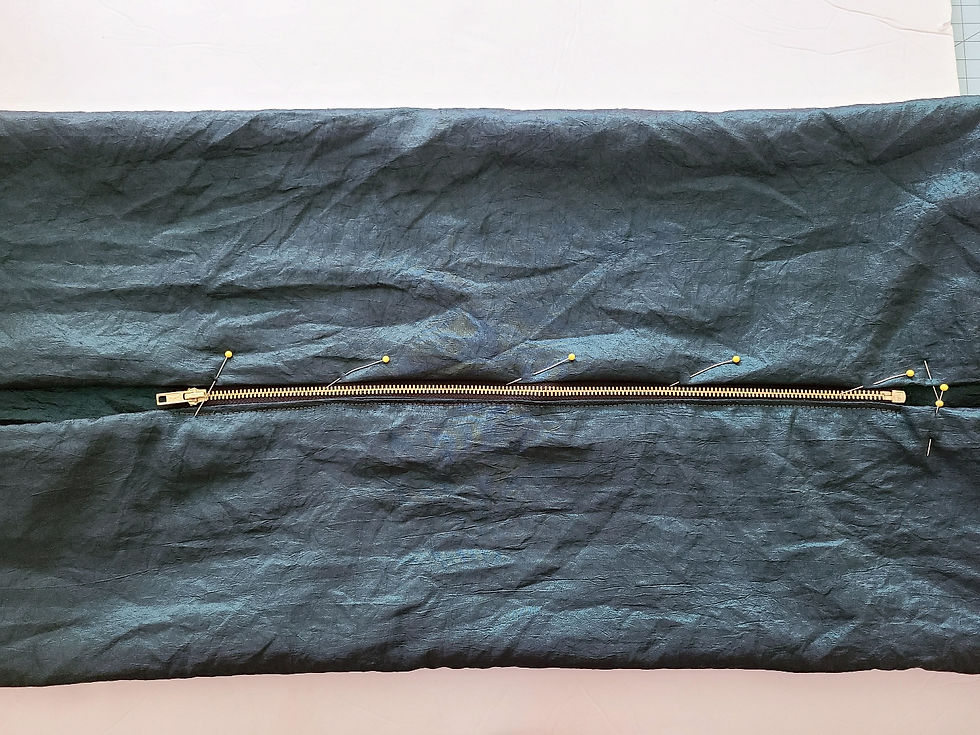
Now the zipper is in! All the stitching is complete.


With shorter side facing you gather one corner of your fabric and knot it around the wooden handle.
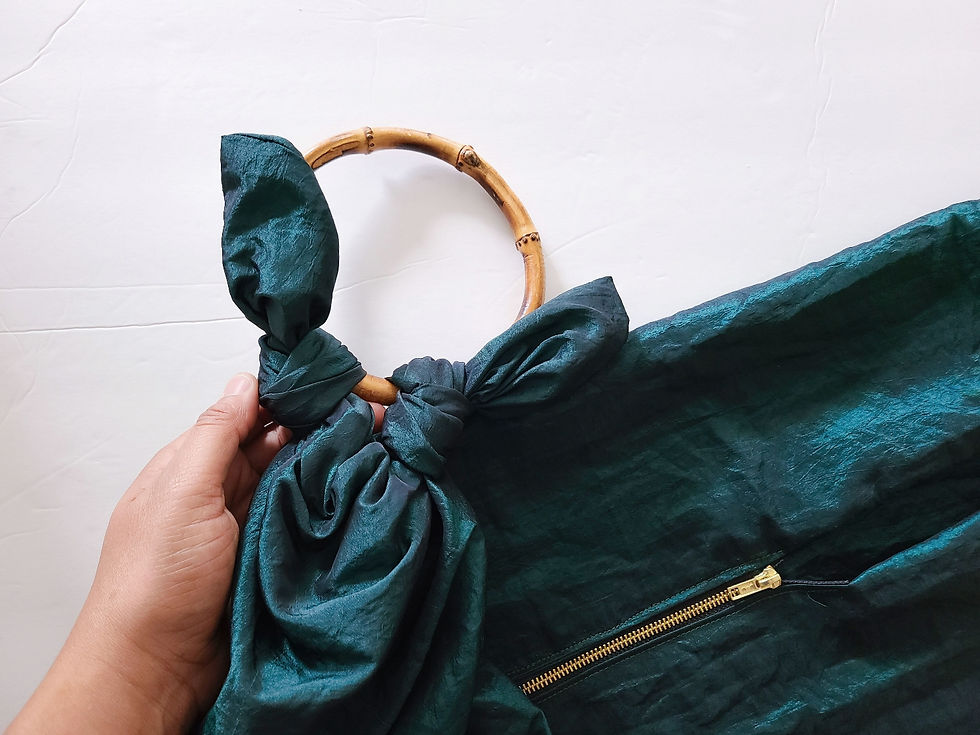

Take the other corner from the shortest side and knot it the same way. Repeat this on the other end of the bag! Voila!!! Your Bag is complete.

For my bag, I used hunter green taffeta fabric and I went with the 18" zipper and 5" wooden handles.

Im in love with the way it turned out and wouldn't change a thing.

Dress by me: McCalls Pattern #7946
Bag by me: Furoshiki Inspo
Shoes: Dr. Marten Sandals
I dont know about you but Im ready to make another!
Until next time!
Marcia
XOXO


Turning a piece of fabric into a reusable bag offers an enjoyable opportunity to explore personal style while reducing reliance on disposable packaging. Adding a zipper can improve convenience, although careful preparation is important to achieve a neat finish. Similarly, resource management in projects helps ensure that available materials, time, and effort are allocated effectively. The College of Contract Management provides professional learning opportunities that encourage better planning and resource coordination.
I enjoy articles that focus on realistic homeowner needs because property maintenance is rarely limited to one type of repair. A variety of small projects may need attention over time. Anyone researching Handyman services in Seal Beach, CA can find value in understanding how professional assistance may help bring more structure to an ongoing home maintenance routine.
I appreciate articles that explain how concrete can be customized to create a more distinctive outdoor environment. A patio or walkway can become an important part of the overall property design. Anyone researching Stamped Concrete In Jacksonville Beach, FL may find the information useful when comparing decorative options and planning an exterior improvement.
What makes this project useful is how the construction of the bag stays simple while still requiring attention to small details, especially keeping the zipper centred and making sure the fabric edges are aligned before stitching. That kind of careful preparation is often what separates a project that looks neat from one that feels improvised, even when the basic technique is straightforward. The same idea applies to professional development, where having a clear process can make unfamiliar requirements much easier to manage. For civil engineering professionals preparing for formal career progression, keeping track of requirements and planning ahead can be particularly helpful when considering the ice professional review date, rather than leaving preparation until the final stages. I also like…
Many professionals often search for what contract management courses when comparing qualifications. This level is generally considered similar to a postgraduate qualification, such as a master’s degree, in terms of complexity. It focuses on advanced leadership and management knowledge. Understanding this comparison can help when planning further study or career progression. In discussions about professional learning, The College of Contract Management is sometimes mentioned in relation to structured programmes.